
Dwarves: Glory, Death and Loot
Sidekick PublishingRole Playing
4.549.00 Reviews
- Version
- 2.0.14
- Installs
- 10.00K
- Age Rating
- Everyone 10+
Screenshots
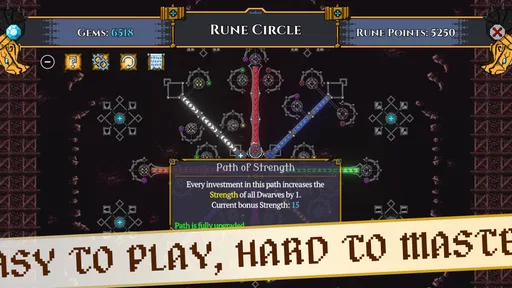
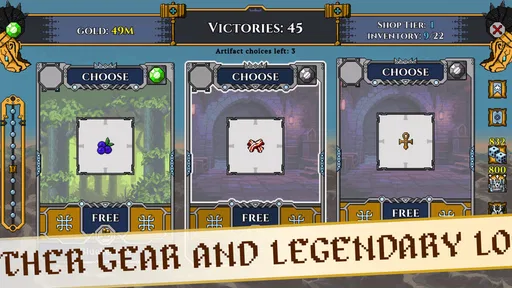
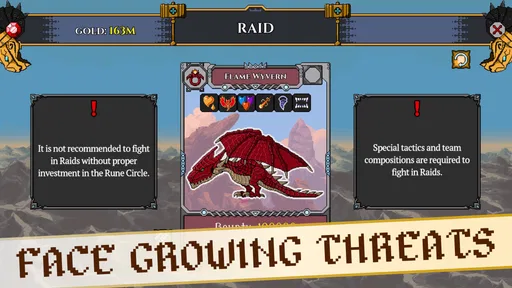
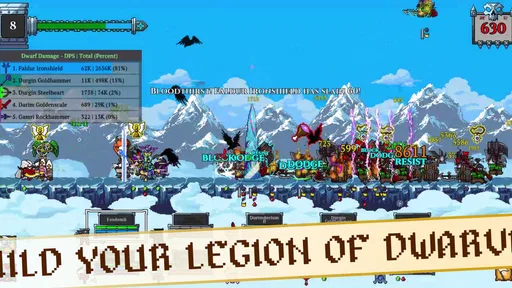
Our Review of Dwarves: Glory, Death and Loot
 Analysis by Appyee
For a shared-device household, the first question with a game like this is less “Will everyone love it?” and more “Can we take turns without losing the thread?” Dwarves: Glory, Death and Loot is a role-playing game built around assembling a dwarf party and making tactical choices as danger and rewards unfold. I’d think of it as a game one person plays while others watch, suggest a plan, or take the next turn at the device—not as a party game designed for simultaneous group play.
Taking turns without taking over
That distinction matters in an everyday setting. A parent might play a short stretch on the sofa while a child watches, then hand over when a new decision comes up. Because the appeal rests on party roles, equipment, and choices under pressure, spectators can join the conversation even when only one person is controlling the game. I would agree on who is making the final call before starting; otherwise, “one more suggestion” can easily turn into a debate over every dwarf’s job.
For a household with different tastes, it is a better fit for people who enjoy watching strategy develop than for someone who wants a quick competitive match. The auto-battle premise also changes what taking turns means: the fun is in preparing and guiding a force, rather than expecting every participant to handle a separate character at once. If your group wants direct co-op or a game where everyone has equal hands-on input, I’d choose something built specifically for multiplayer instead.
Keep the play session easy to hand over
On a shared phone or tablet, I’d make a simple habit of passing the device at a natural pause and letting the next player inspect the current situation before making a change. That small handover helps avoid accidental choices and gives everyone a chance to understand why the party is set up as it is. It is especially useful when a younger player is still learning to weigh immediate rewards against keeping the group able to handle the next threat.
I would also treat the device itself as the boundary: decide whose turn it is, avoid changing another person’s strategy without asking, and keep any personal account or purchase decisions under the account holder’s control. I’m not assuming the game offers household profiles or parental controls. The sensible approach is to check the device’s own account and purchase settings, and to have an adult handle payment decisions rather than relying on the game to create those boundaries.
Setting the Scene: A World of Adventure Awaits
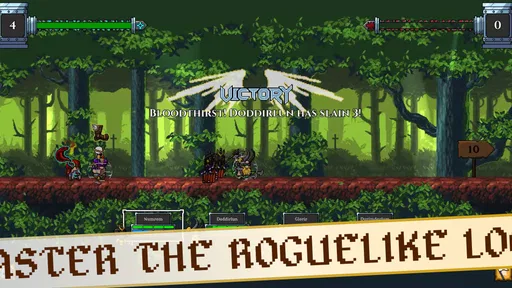
The moment you boot up the game, you’re transported to a land rich with treasures and danger. The graphics have this delightful retro vibe, reminiscent of the golden era of gaming. It’s like stepping into a pixelated fairy tale, where each level brings a new set of challenges and rewards. The game world is vast and varied, from lush forests to treacherous mines, ensuring you’re never bored.
You play as a group of dwarves, each with their own unique abilities. The goal? To conquer dungeons, defeat monsters, and collect as much loot as you can. It’s a straightforward premise, but the execution is anything but simple. You’ll need to strategize, using each dwarf’s skills to navigate through levels and overcome obstacles.
Gameplay Mechanics: Simple Yet Deep
What I love about Dwarves: Glory, Death and Loot is its balance of accessibility and depth. The controls are intuitive, making it easy for newcomers to jump right in. Yet, as you progress, the game introduces more complex mechanics that require you to think a few steps ahead. This makes for a deeply satisfying gameplay loop.
Each dwarf has a role to play, whether it’s tanking damage, dealing it, or supporting the team. This creates a dynamic where you must constantly assess and adapt your strategy. And trust me, nothing feels as rewarding as perfectly executing a plan and watching your dwarves triumph over a horde of enemies.
Audio and Visual Delight
The sound design is another highlight. The music is catchy and complements the game’s whimsical tone perfectly. And the sound effects? Spot on. There’s something oddly satisfying about the clink of coins and the thud of a defeated enemy hitting the ground.
Visually, the game doesn’t push the limits of modern graphics, but its charm lies in its simplicity. The pixel art is detailed and colorful, capturing the essence of each environment and character. It’s a reminder that sometimes, less really is more.
Challenges and Rewards: A Perfect Balance
One of the standout features is the game’s difficulty curve. It starts off easy enough, letting you get a feel for the mechanics. But as you dive deeper, the challenges ramp up significantly. Each level feels like a new puzzle to solve, with varying enemies and traps to keep you on your toes.
And let’s not forget the loot. There’s a satisfying variety of weapons and items to collect, each offering different bonuses and abilities. It’s all about finding the right gear to complement your playstyle, adding another layer of strategy to the mix.
Community and Longevity
While Dwarves: Glory, Death and Loot is primarily a single-player experience, the community around it is thriving. Online forums and fan sites are buzzing with tips, tricks, and fan art. This sense of community adds to the game’s longevity, as players share their experiences and discoveries.
Plus, the developers are known for listening to feedback and rolling out updates, ensuring the game remains fresh and engaging. It’s this dedication to the player base that makes the game not just a one-off adventure, but a lasting experience.
Who will get the most from a run?
I’d recommend it most to players who like watching a plan come together: choosing complementary dwarf roles, learning how equipment changes a party’s prospects, and accepting that a promising expedition can still go badly. It sits closer to a tactical roguelike than to a conventional role-playing adventure built around dialogue and a long authored story. If your favorite part of an RPG is shaping a team and adjusting to risk, that difference is a strength. If you mainly want character conversations, exploration at your own pace, or direct action control, a different RPG will probably suit you better.
It can work well as a compact evening game. For example, after dinner I might play one stretch, pause at a sensible break, and come back later with a clearer head to reconsider the party and its gear. That is a more useful rhythm than treating every run as background tapping: the tactical choices deserve attention, while the auto-battle side means the game’s central appeal is not rapid manual combat. A player looking for a game to play while barely watching the screen may find the decisions easier to miss than expected.
Small decisions that make the strategy clearer
My practical advice is to change one thing at a time when a setup fails. If I replace several roles or pieces of equipment together, it becomes harder to tell which adjustment helped. Keeping a rough mental note of what the party lacked—staying power, damage, or support—turns a failed attempt into information rather than a reason to repeat the same approach. That method is especially helpful for newer players who might otherwise treat loot as an automatic upgrade instead of asking whether it fits the role they need.
Loot can also tempt you to chase every attractive item, but a collection of individually strong pieces is not necessarily a coherent party. I’d prioritize whether an item complements the dwarf carrying it and the rest of the group’s plan. This is a useful trade-off to keep in mind when deciding whether to experiment: trying an unusual arrangement can be fun, but a more balanced setup is the safer choice when you want a steadier run. The game’s appeal comes partly from learning that distinction for yourself.
How it compares with other role-playing games
Compared with story-heavy RPGs, this one puts more weight on combat preparation and the consequences of party composition. Compared with action games, it asks for less moment-to-moment reflex control and more thought about how the group is arranged. And beside a standard auto-battler, its dwarf-led fantasy and roguelike framing give the runs a stronger sense of risk and progression. Those are meaningful differences, not reasons it will suit every player: anyone who wants a fully hands-on combat loop or a multiplayer session should look elsewhere.
There is also a learning curve beneath the approachable controls. Getting started may be simple, but becoming consistent means noticing how dwarf roles, equipment, and growing difficulty interact. I would not expect every run to feel like a clean victory, and that can frustrate players who prefer reliable progress after each short session. The better mindset is to treat setbacks as part of figuring out a stronger party rather than as proof that every choice was wasted.
Price, age, and household expectations
The game is sold for $4.99, so I’d decide based on whether its repeatable tactical loop sounds appealing rather than on the promise of a one-time story. Its 4.5 average from around 1,800 ratings and over 10,000 installs suggest that it has found an audience, though those figures don’t tell me whether a particular household will enjoy the same style. Sidekick Publishing is the developer, and the game is rated Everyone 10+, a useful starting point for an adult deciding whether its fantasy combat fits a child in the home. I would still check the game together and use the device’s own purchase and account settings for household boundaries.
The release date is January 14, 2026, and the current version is 2.0.14, with an operating-system requirement of 11. Before buying, I’d check that the device meets that minimum and that the person paying understands the $4.99 cost. The age rating can guide a conversation, but it does not replace a parent’s judgment about a child’s comfort with combat or the way the game handles challenge and failure.
A practical verdict for a shared home
For a household, the clearest fit is one or two people who enjoy taking turns discussing a strategy, while everyone else is happy to watch rather than control a separate character. I wouldn’t buy it expecting built-in family profiles, shared progression tools, or a coordinated multiplayer mode. Instead, decide whose save and account are being used, keep purchase authority with the account holder, and agree on when another person can change the party. Those simple boundaries matter more than any assumption about family-specific features.
If the player at home enjoys role-based tactics, pixel art, and the uncertainty of a roguelike run, I think the price is reasonable for a game they can revisit and learn from. If they want an open-ended social game, a gentle experience with little combat, or a narrative RPG where story scenes are the main event, I’d choose something else. The best recommendation is therefore a personal one: try it as a focused dwarf-party strategy game, not as a shared-device multiplayer title.
One final practical question is whether it suits a brief break. It can, if you are comfortable pausing at a sensible point and returning to a tactical run, but it is not the kind of game I’d recommend to someone who wants every session to be effortless or interchangeable. I’d keep the first few sessions unhurried, learn how the roles and gear fit together, then decide whether the escalating challenge is satisfying or more demanding than the household wants from a casual game.
In conclusion, if you’re hunting for a game that blends strategy, adventure, and a hearty dose of charm, Dwarves: Glory, Death and Loot is worth your time. It’s a reminder of why we fell in love with games in the first place: the thrill of exploration, the satisfaction of mastering a challenge, and the joy of discovering something new. So, are you ready to lead your band of dwarves to glory?
Verdict
Strengths of Dwarves: Glory, Death and Loot
- Engaging storyline with rich lore.
- Diverse character classes to choose from.
- Challenging dungeons with strategic battles.
- Beautifully crafted pixel art graphics.
- Regular updates with new content.
Limitations of Dwarves: Glory, Death and Loot
- Some levels can be too difficult.
- In-app purchases can be pricey.
- Requires constant internet connection.
- User interface can be cluttered.
- Battery consumption is relatively high.
Similar Picks in This Category
View All
Hair Dye
CrazyLabs LTD4.4

Monster High™ Beauty Salon
CrazyLabs LTD4.5

Bus Simulator - Bus Games 3D
Jima Apps4.4

Flight Pilot: 3D Simulator
Wildlife Studios4.1


Super Stylist Fashion Makeover
CrazyLabs LTD4.4
Frequently Asked Questions
What is the primary objective of Dwarves: Glory, Death and Loot?
In Dwarves: Glory, Death and Loot, players embark on a thrilling adventure to lead a clan of dwarves through treacherous dungeons. The main objective is to gather loot, defeat enemies, and enhance your clan’s skills and equipment. Strategy and resource management are key as you aim for glory while avoiding death.
Is Dwarves: Glory, Death and Loot suitable for all age groups?
The game is designed for players aged 12 and up due to its fantasy violence and strategic complexity. While younger players might enjoy the colorful graphics and basic gameplay, the strategic elements require critical thinking and planning, making it better suited for teens and adults who enjoy tactical RPGs.
How does the multiplayer mode work in Dwarves: Glory, Death and Loot?
Dwarves: Glory, Death and Loot offers a thrilling multiplayer mode where you can team up with friends or compete against other players online. You can form alliances, share resources, and participate in clan wars. The multiplayer feature adds a layer of social interaction and competition, enhancing the overall gameplay experience.
Are there in-app purchases in Dwarves: Glory, Death and Loot?
Yes, the game includes in-app purchases. These allow players to buy various items, such as exclusive gear, energy boosts, and special abilities, which can enhance the gaming experience. While purchases can provide advantages, they are not necessary to progress, as players can earn rewards through regular gameplay.
What kind of updates and support can players expect?
The developers of Dwarves: Glory, Death and Loot are committed to providing regular updates that include new content, bug fixes, and feature enhancements. Players can expect seasonal events, additional quests, and community support through forums and social media channels, ensuring a dynamic and engaging gaming experience.
Play our best games!


